
BRAMOSIA
Craving
- 2025 -
dichiarazione di progetto
La bramosia è un desiderio che non conosce relazione.
È un movimento cieco, centripeto, che riduce tutto a materia da possedere.
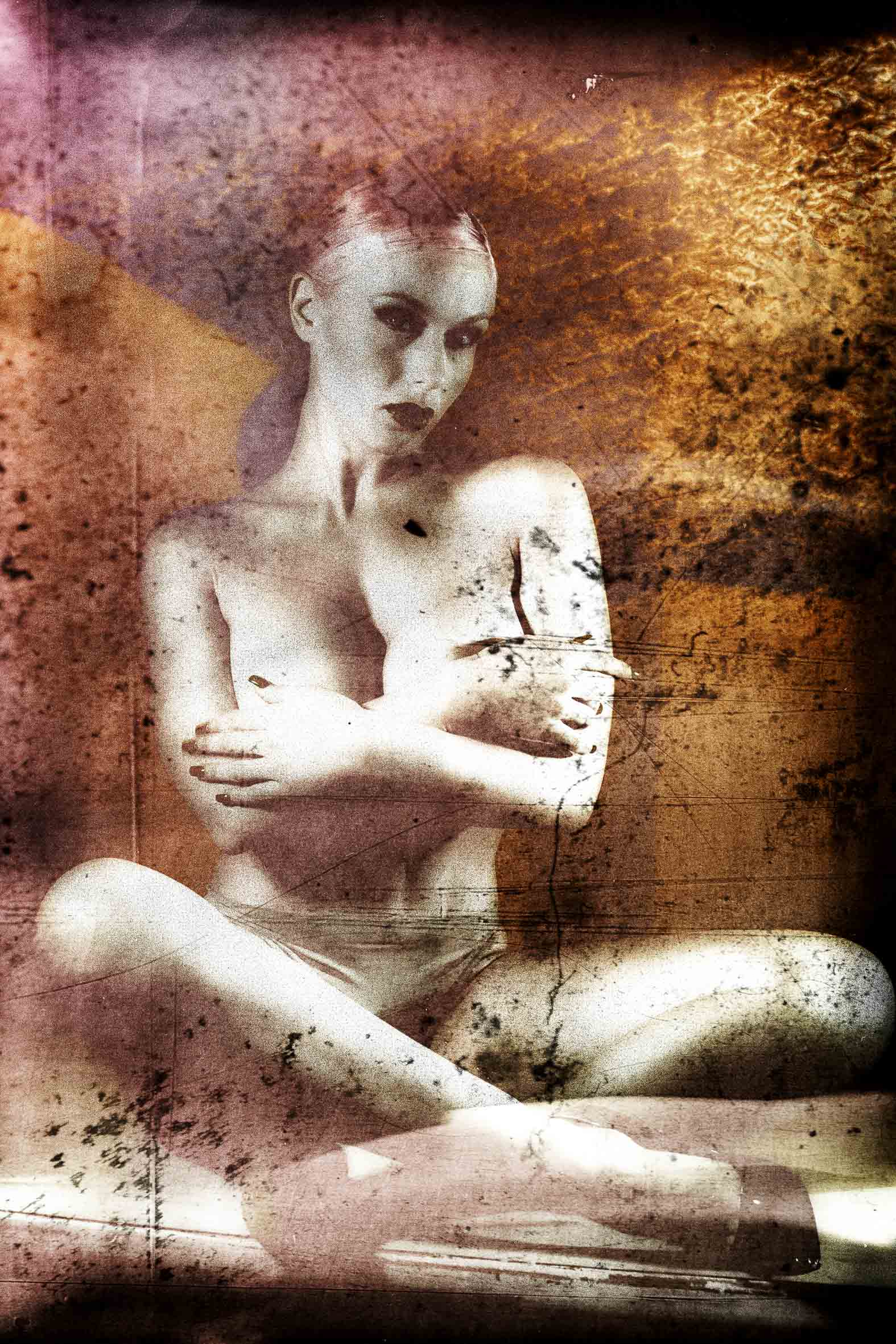
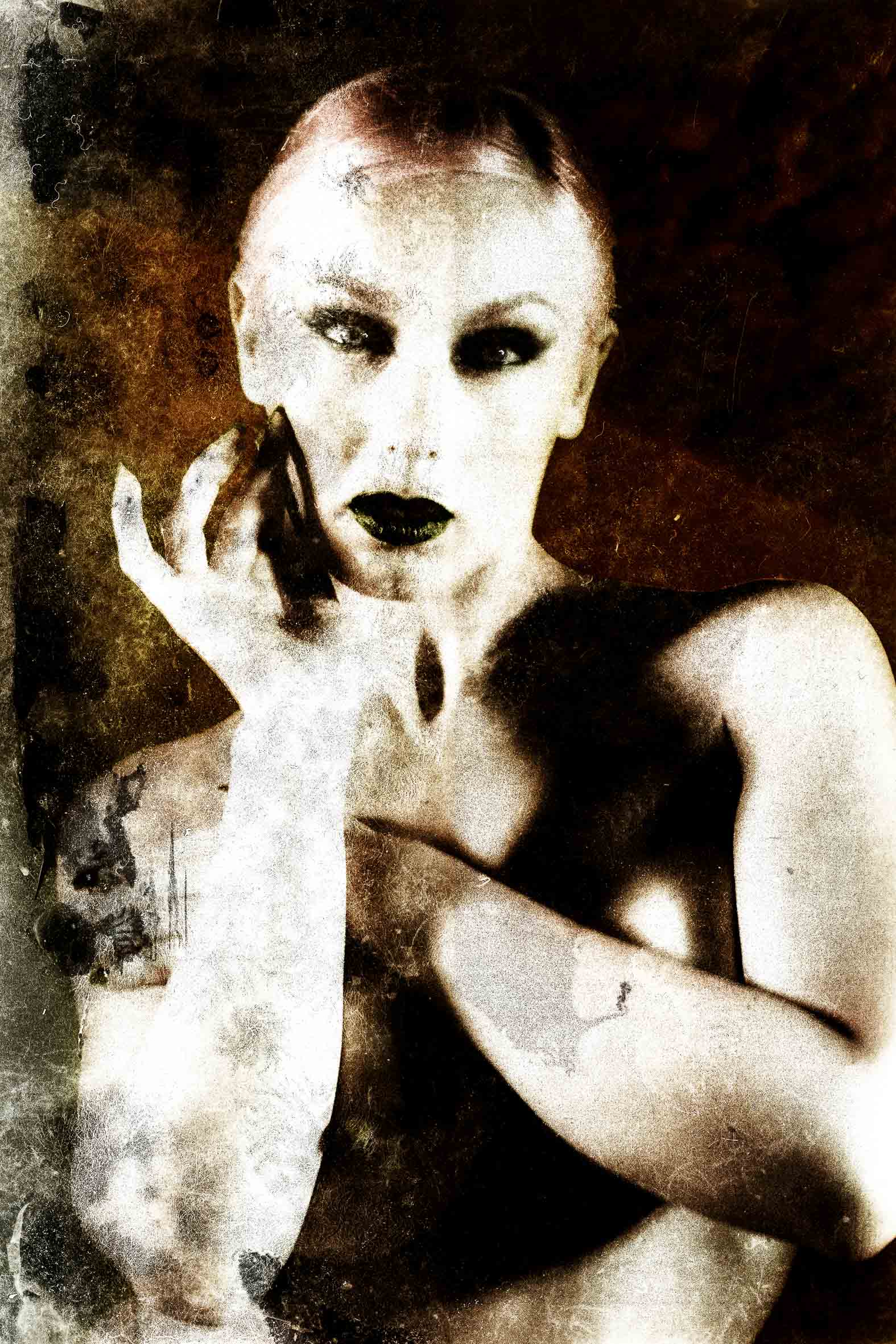
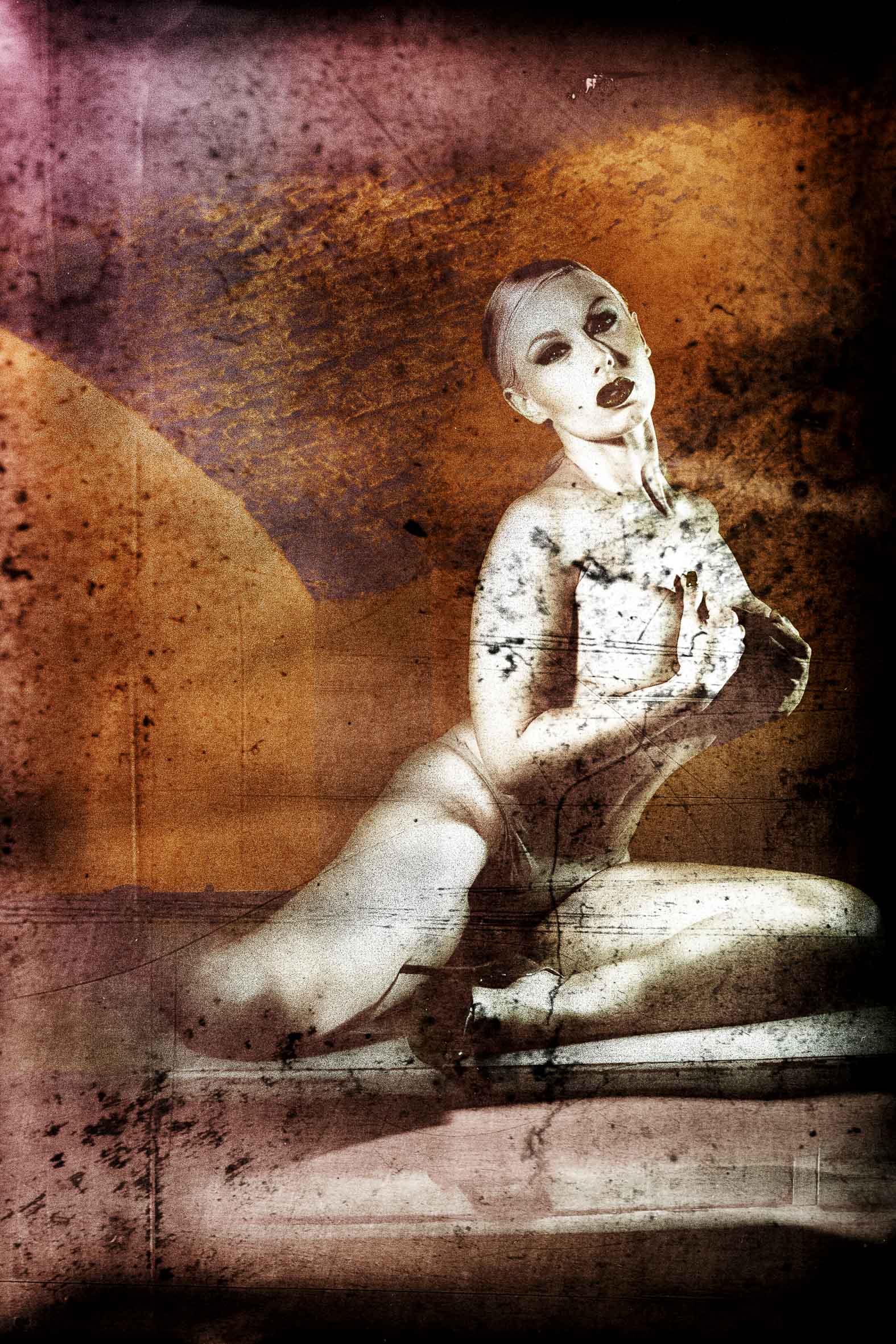
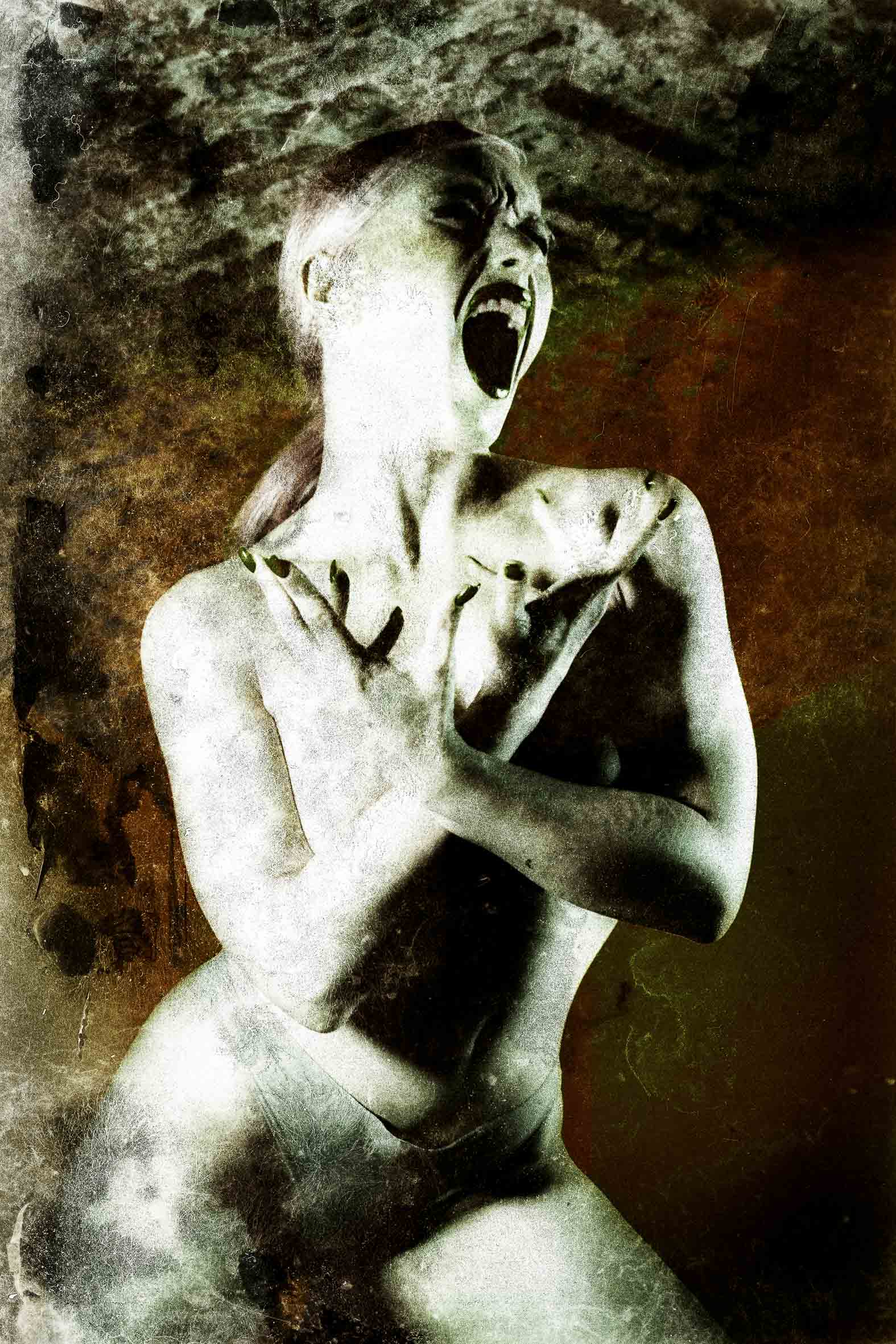
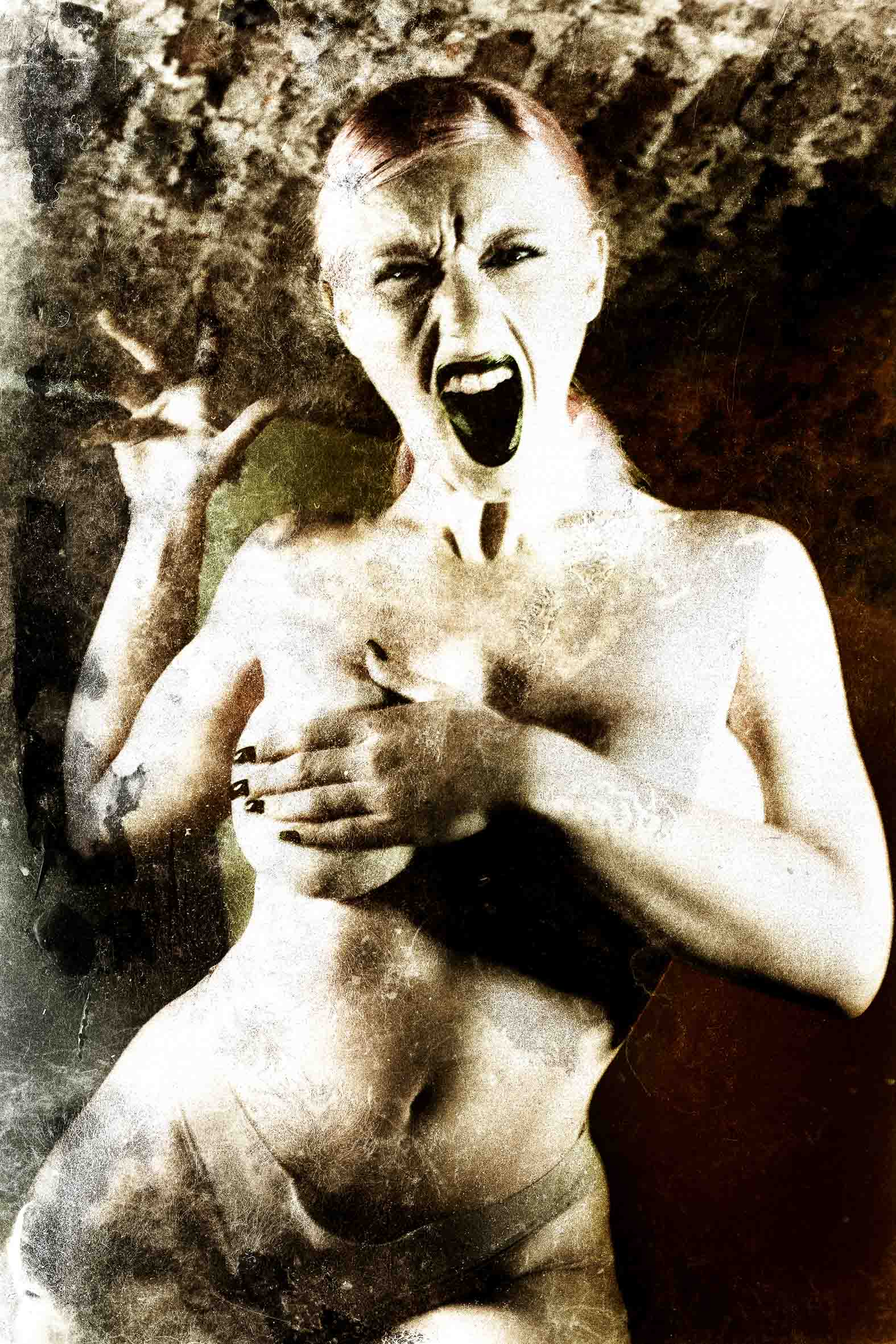
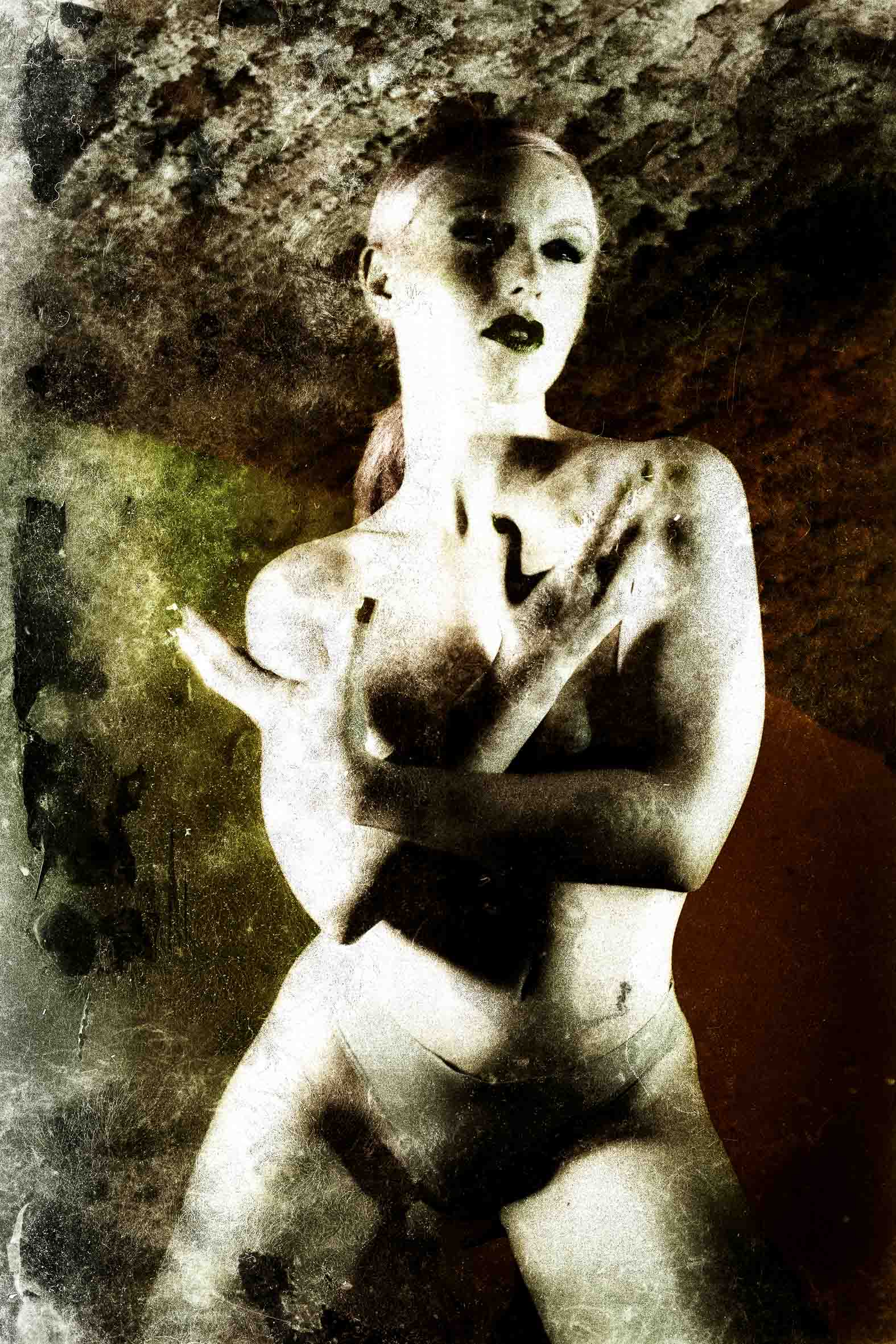
In questo progetto il corpo diventa il luogo del conflitto: non abitato, ma consumato. Le figure emergono da fondali corrosi, senza coordinate temporali o spaziali, come se fossero intrappolate in una dimensione interiore. Le posture chiuse, le braccia che stringono il petto, le mani che afferrano la carne, raccontano un atto di appropriazione che non ammette l’altro. Il desiderio non si apre: si ripiega su se stesso fino a collassare.
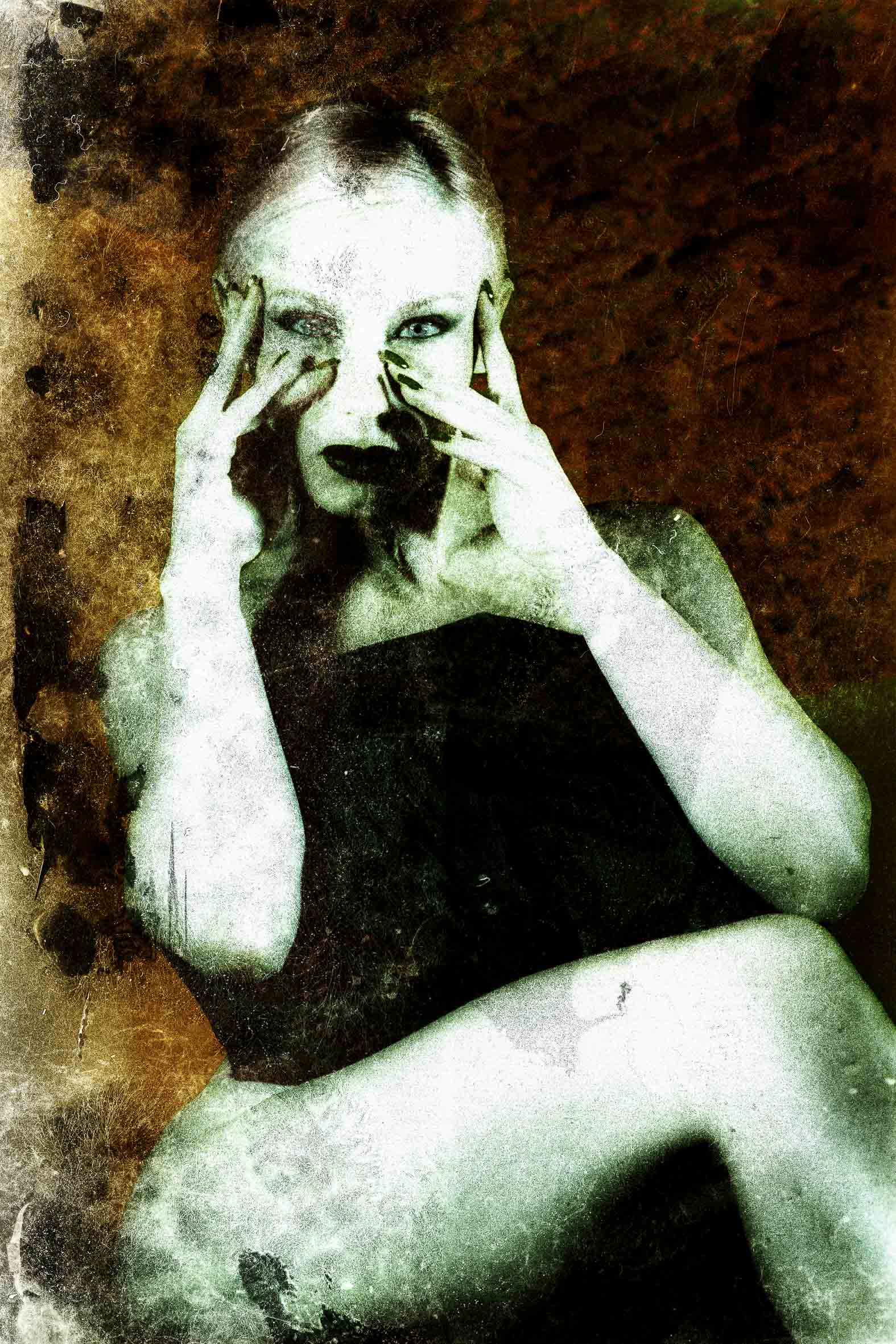
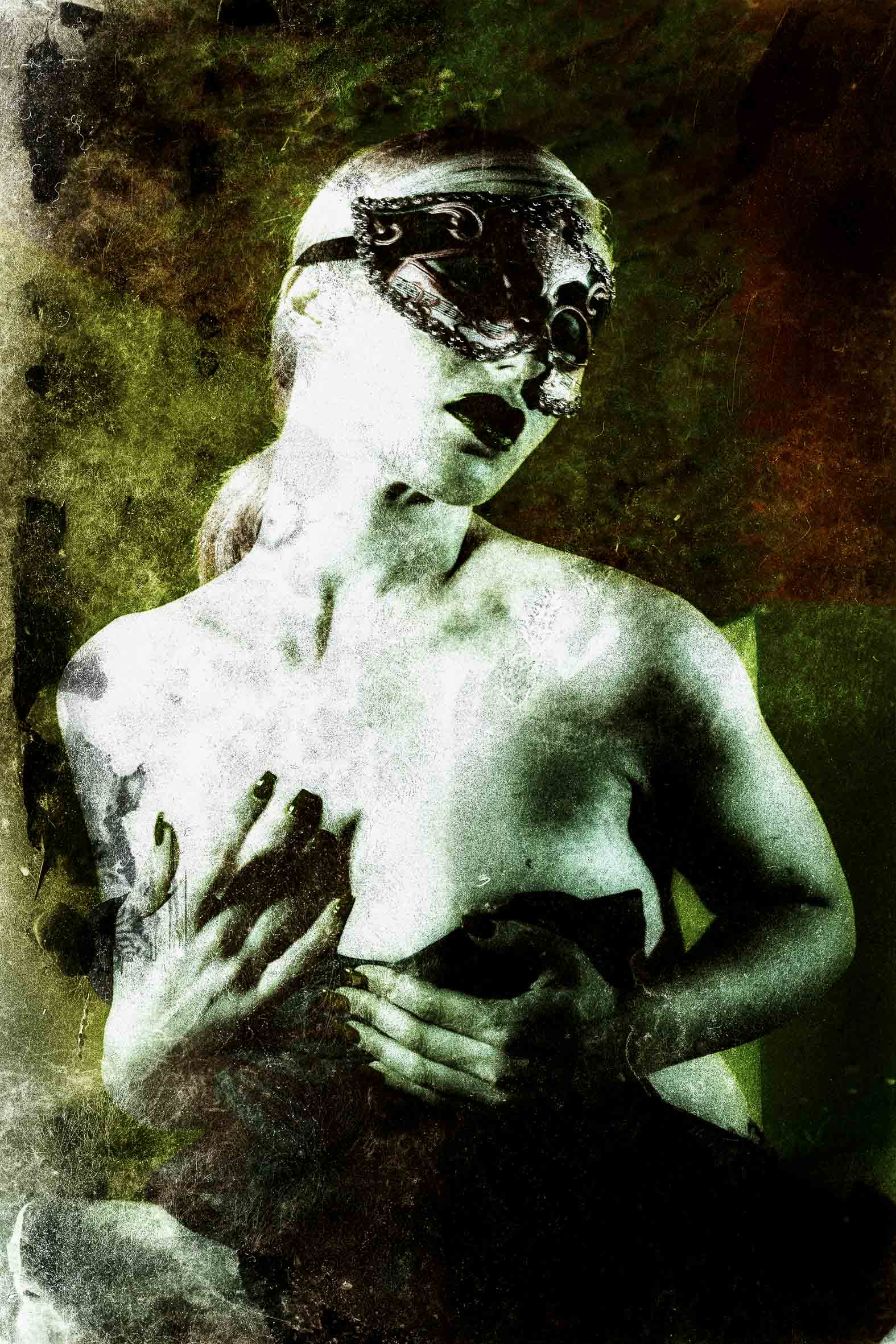
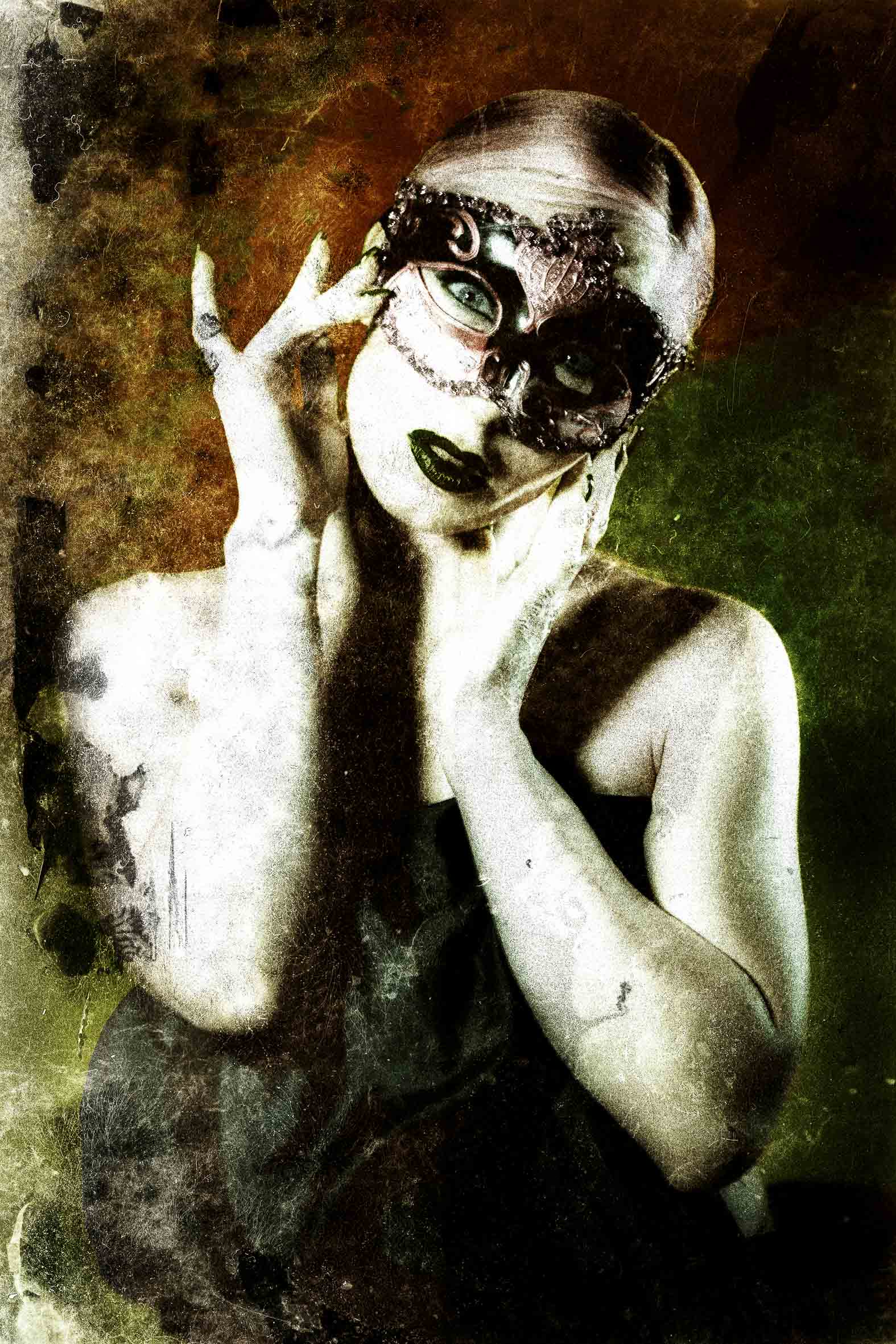
I volti oscillano tra abbandono ed eccesso. Bocche spalancate, grida mute, sguardi che sfuggono o si impongono allo spettatore segnano la perdita di controllo. La bramosia non è piacere, ma tensione che degenera, impulso che consuma chi lo prova prima ancora dell’oggetto desiderato. La presenza della maschera introduce l’idea di un’identità artificiale, indossata e deformata dal bisogno di possesso.
Il colore non descrive, contamina. Verdi acidi, rossi terrosi e incarnati slavati trasformano la pelle in superficie vulnerabile, esposta, attraversata da tracce e ferite visive. Le immagini sono graffiate, stratificate, abrase: come se fossero state usate fino allo sfinimento. Anche la fotografia diventa oggetto di bramosia, sottoposta a un processo di consumo che ne compromette l’integrità. Nella sequenza delle immagini si percepisce una progressione emotiva: dalla tensione silenziosa al possesso, dalla perdita di misura alla deformazione. Non c’è catarsi, non c’è liberazione. La bramosia non conduce all’appagamento, ma a un vuoto più profondo, amplificato dall’eccesso stesso del desiderio.
Bramosia è l’antitesi dell’amore.
Dove l’amore riconosce, la bramosia annienta.
Dove l’amore ascolta, la bramosia consuma.
In queste immagini il desiderio mostra il suo volto più crudo: non come slancio vitale, ma come forza che divora, riducendo il corpo e i sentimenti a pura voluttà, fino a perdere ogni traccia di umanità.
Project Statement
Lust is a desire that knows no relationship.
It is a blind, centripetal movement that reduces everything to matter to be possessed.
In this project, the body becomes the locus of conflict: uninhabited, but consumed. The figures emerge from corroded backdrops, without temporal or spatial coordinates, as if trapped in an interior dimension. The closed postures, the arms clutching the chest, the hands grasping the flesh, recount an act of appropriation that does not admit the other. Desire does not open: it folds in on itself until it collapses.
The faces oscillate between abandonment and excess. Gaping mouths, silent cries, glances that escape or impose themselves on the viewer signal a loss of control. Lust is not pleasure, but tension that degenerates, an impulse that consumes the person who experiences it even before the desired object. The presence of the mask introduces the idea of an artificial identity, worn and deformed by the need for possession.
Color does not describe, it contaminates. Acid greens, earthy reds, and faded complexions transform the skin into a vulnerable, exposed surface, crisscrossed by visual traces and wounds. The images are scratched, layered, abraded: as if they had been used to exhaustion. Even photography becomes an object of lust, subjected to a process of consumption that compromises its integrity. In the sequence of images, an emotional progression is perceived: from silent tension to possession, from loss of measure to deformation. There is no catharsis, no liberation. Lust does not lead to fulfillment, but to a deeper void, amplified by the very excess of desire.
Lust is the antithesis of love.
Where love recognizes, lust annihilates.
Where love listens, lust consumes.
In these images, desire shows its rawest face: not as a vital impulse, but as a devouring force, reducing the body and feelings to pure voluptuousness, to the point of losing every trace of humanity.

 |  |  |
| ATTILIA | DIANA | CALLIOPE |
 |  |  |
OPPIA | TAURA | GELLIA |
 |  |  |
| EUTROPIA | OVIDIA | APPIA |